Pathway brings a construction-management track into high schools and districts.
Aedifica Pathway is a STEM, civil engineering and construction management program for high schools and districts serving grades 9–12. The program is flexible and curricula can be developed to address local needs. The curricula combine project-based engineering, construction-management thinking, industry exposure, and New Jersey standards alignment, and can be delivered as a full-year course, semester course, embedded track, after-school program, or intensive.
The model draws directly on Aedifica's pre-college engineering delivery through Stevens Institute of Technology: students who finished those programs reported new vocabulary, new confidence, and new futures in civil engineering and construction management.
Existing STEM is a foundation, not a substitute. A strong STEM department teaches the science and math this work rests on. Engineering and construction management are a separate discipline: scope, schedule, cost, safety, sequencing, and one that sits outside most certification routes and teacher-preparation programs, because it is learned on projects rather than in coursework. Aedifica supplies instructors who practice it, and works alongside your educators rather than around them: they keep the classroom relationship, we bring the jobsite.
Status
Continuously delivered every summer since 2022, Stevens pre-college
Audience
High schools and districts, grades 9–12
Format
District-embedded curriculum · project-based
Alignment
NJ & NY standards · college articulation
Outcome
Credential line-of-sight and industry exposure
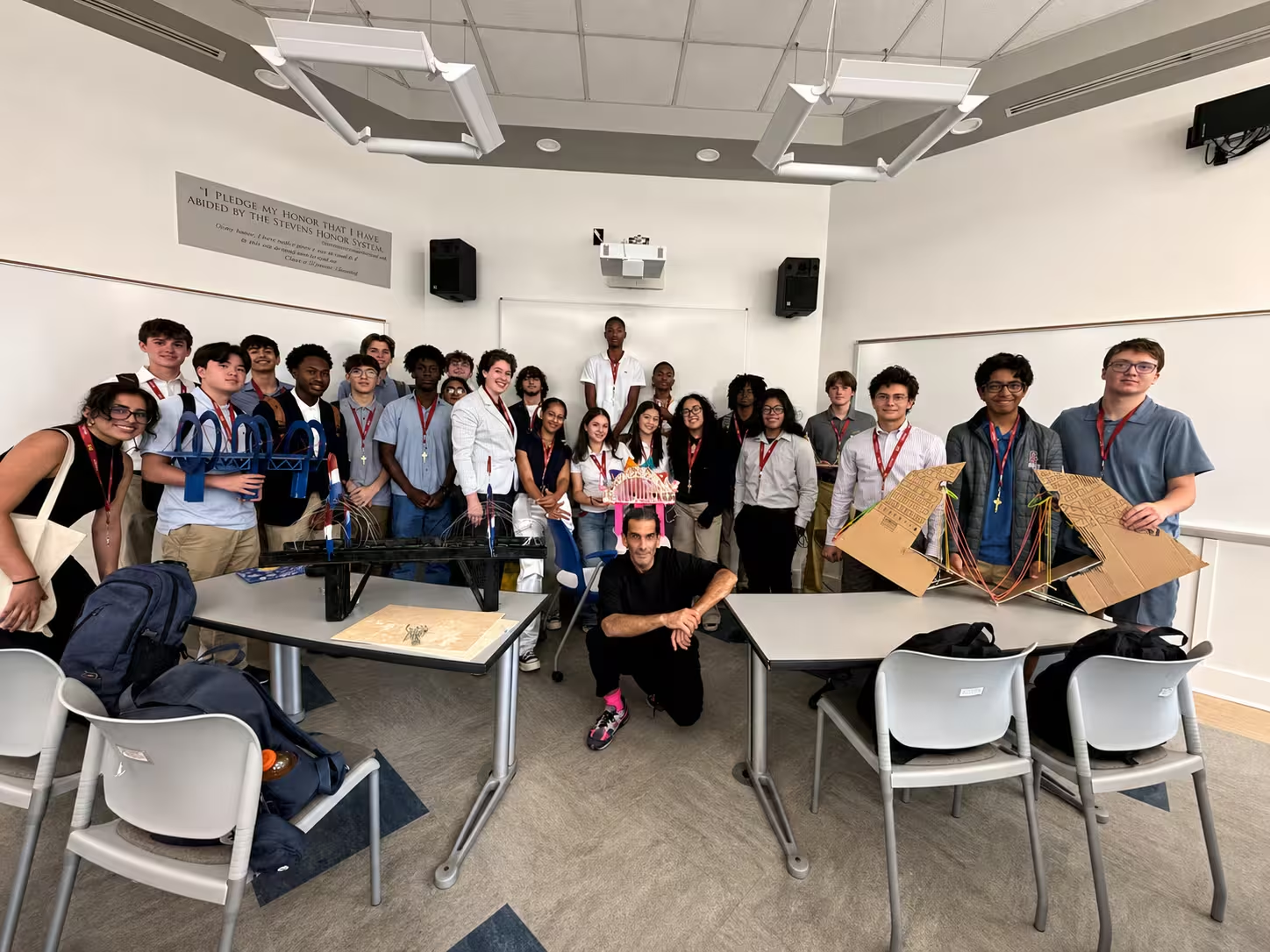
- Resilient-futures curriculum: infrastructure, sustainability, and place
- Final projects presented for constructive peer and practitioner feedback
- Direct hand-off toward Launch-built institutional pathways
Delivery record: Pathway has been taught continuously every summer since 2022 in the Stevens Institute of Technology pre-college Civil Engineering course. Participant satisfaction data and sourcing are reported in Impact & accountability, alongside the Explore results.
Proven delivery · Stevens pre-college
The Pathway model, taught every summer since 2022.
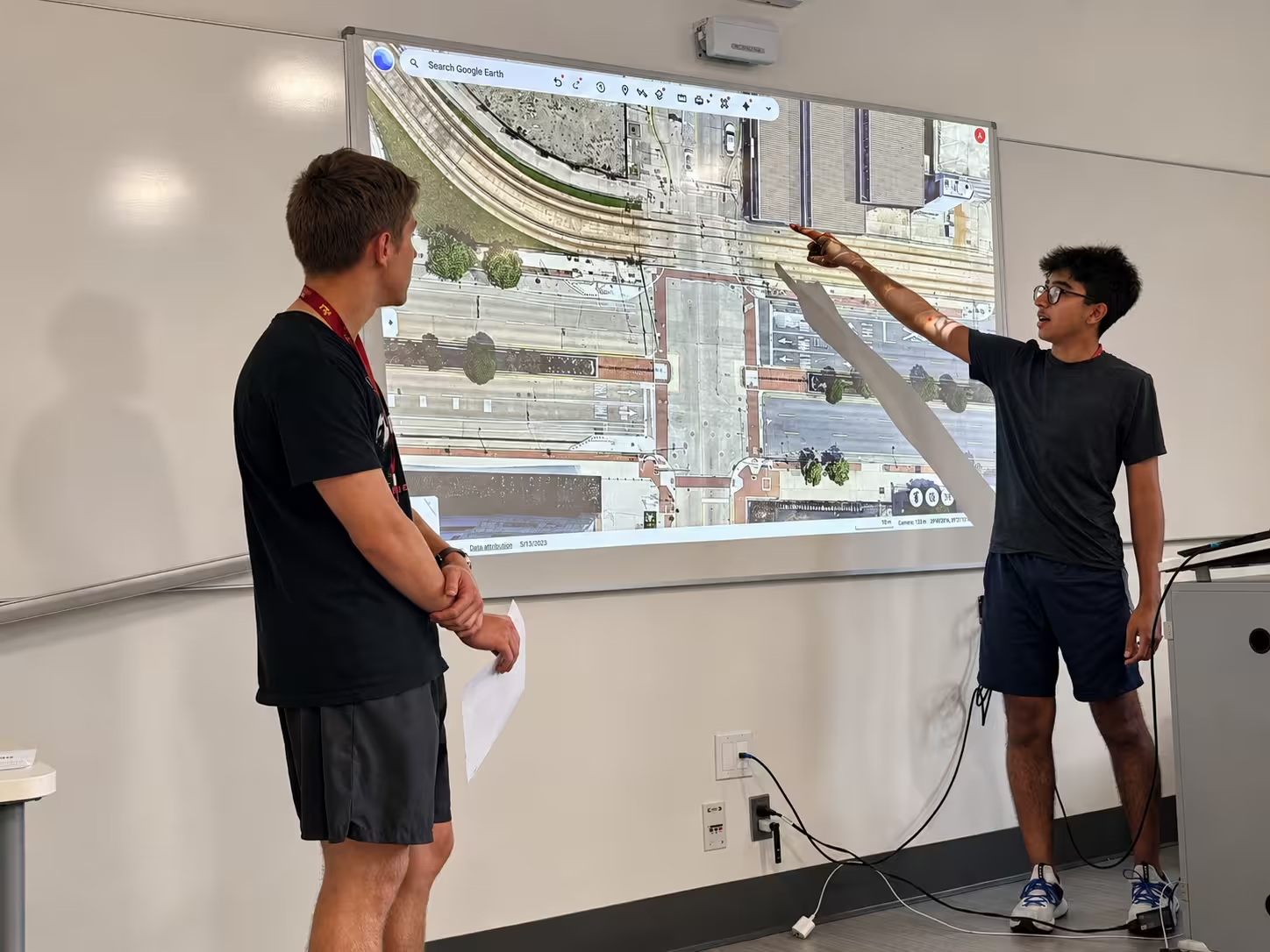
Aedifica's Pathway model is grounded in the Stevens Institute of Technology pre-college Civil Engineering course, taught by co-founder Dr. Karim Karam. Every summer since 2022, students rated the course and instructor consistently high.
98%
rated the program Excellent each year, and 0% rated it Poor, all three years
99%
rated Professor Karam Excellent (2022–2024)
96%
rated the teaching above average on being motivating and approachable
Every summer since 2022
same course, same instructor
Student satisfaction surveys, Stevens Institute of Technology Office of Pre-College Programs (2022–2024). These are participant ratings of the course and instructor, not academic-outcome measures. Enrollment, completion, and articulation figures for Pathway are not yet published.
Standards-aligned · New Jersey & New York
Principles of Civil Planning, the pre-college curriculum.
The high-school curriculum behind Pathway is a nine-lesson engineering-and-planning sequence, explicitly aligned to both New Jersey and New York standards.
New Jersey (NJSLS)
HS-ETS1-1 → HS-ETS1-4 engineering design · ESS3 & Climate Change Education · 9.1 / 9.2 / 9.4 Career Readiness, Life Literacies & Key Skills.
New York State
CDOS (Career Development & Occupational Studies) · Engineering Design · Earth Systems · Physical Science Applications · Sustainability.
NGSS
HS-ETS1-1 → 4 · HS-ESS3-1 · HS-ESS3-4 · HS-ESS3-6.
21st-century skills
Critical thinking · creativity · collaboration · communication · financial & global literacy.
The nine lessons
This is a sample curriculum
What you see below is a sample, not the catalogue. Resilient Futures is a complete, real curriculum we have designed and can run; it exists to show a district how we build, not to define what a district receives.
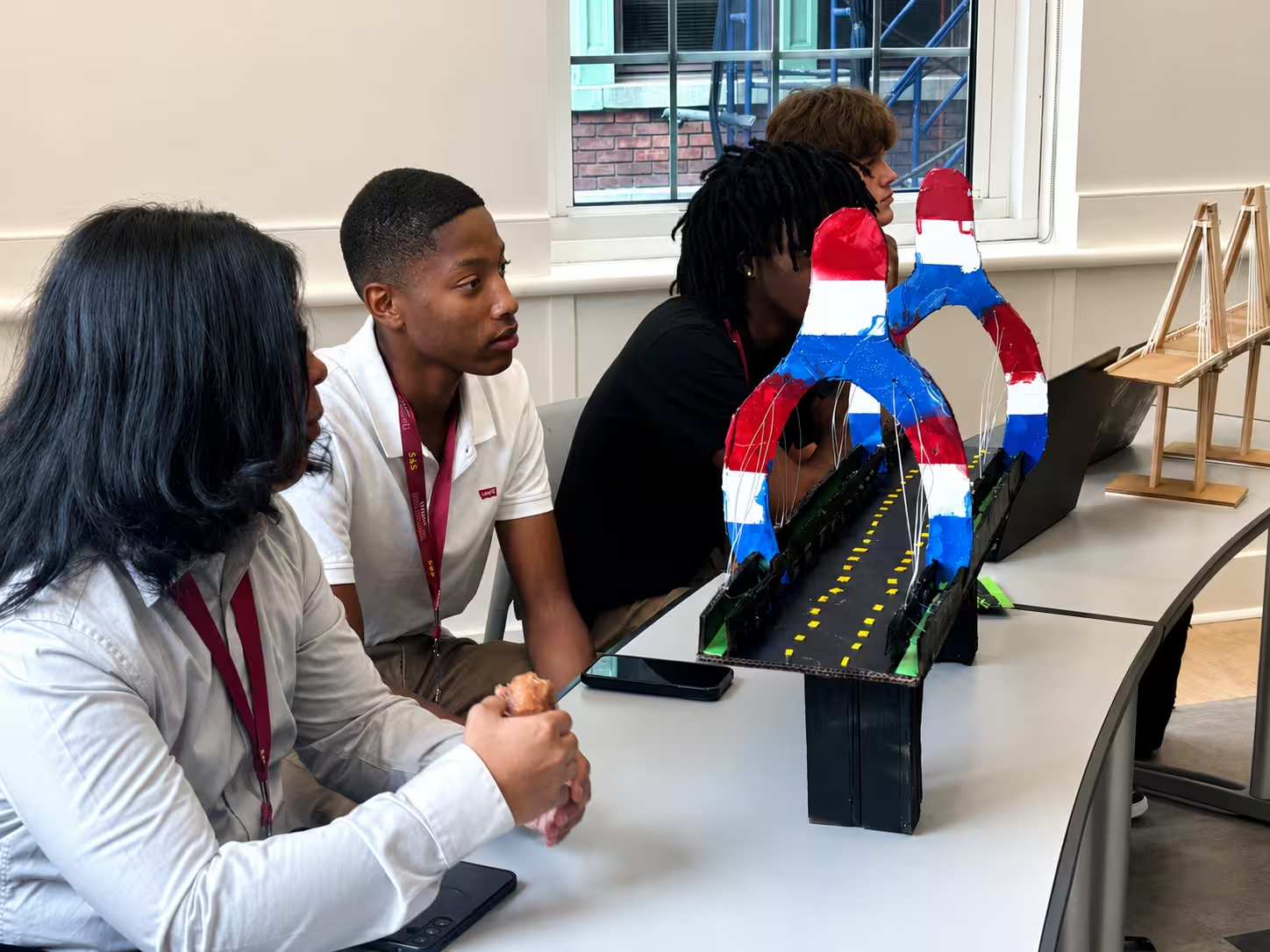
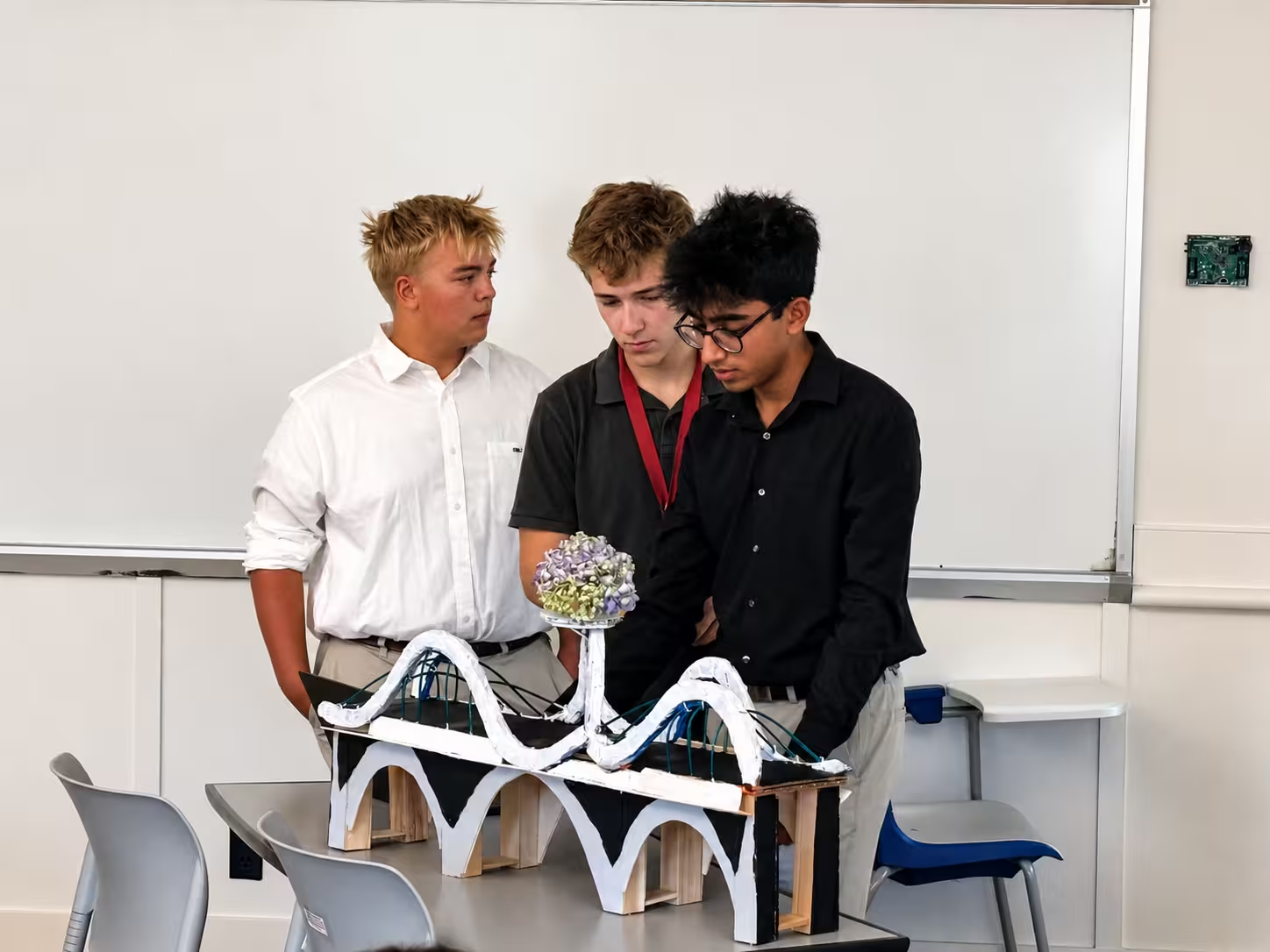
Where it comes from. It is built on the Hillside–Stevens bridge programme and the Resilient Futures studio designs. Pathway’s delivered record is continuous, every summer since 2022, of pre-college engineering at Stevens Institute of Technology, reported in Impact & accountability.
We build to order. Content, sequence, delivery mode, and calendar are scoped with your district, see “Ways to run it” above. If this sample does not fit your schedule or your cohort, we write the one that does.
Curriculum shells
Ways to run it
Bespoke by design.
Pathway is built with your district rather than delivered to it. Content, delivery mode, and timeline are scoped with your team, and the content adapts to how your cohort learns: reading level, language supports, hands-on ratio, and pacing. The standards alignment holds regardless of the shape you choose. The Resilient Futures curriculum below is one instance, not the template.
Full-year course
A year-long track inside the school day, scoped to your master schedule.
Semester course
A single-term version carrying the same standards in a compressed arc.
Layered onto an existing course
A construction-management track added to a CTE, STEM, or engineering offering you already run.
After-school or dual-period block
A recurring block for students who cannot fit a full course.
Vacation & summer intensive
A concentrated build across a break: the model already delivered through Stevens pre-college.
Cohort-tailored content
Pacing, reading level, language supports, and hands-on ratio set to the cohort you actually have.
What it takes to run it
What we need from you, stated plainly.
Before anyone evaluates curriculum, they need to know what this costs in schedule, staff time, and space. Here is the operating footprint.
Schedule footprint
Flexible, full-year, semester, layered, block, or intensive; see "Ways to run it" above.
Who teaches
Aedifica supplies instructors who practice the work, alongside your educators; they keep the classroom relationship.
Cohort size
Minimum 10, maximum 25 per cohort.
Your staff commitment
Scoped with your team before the cohort starts, and published here once confirmed.
Room & materials
The partner provides the room. Aedifica brings all materials: kits, consumables, and testing equipment.
Lead time
Four weeks from signed agreement to first session. The programs are built and ready to run.
Pilot option
Single-cohort pilots are available for partners who want to test the model before a full commitment.
Co-authored with your educators.
For districts: Pathway is co-authored with your educators, designed with them, never at them, and implementable by the people who inherit it.